SEOUL—(Newswire)—UD IMPACT, led by CEO Kim Jung-heon, held “LOCAL FOURCAST: Four Forces Creating Sustainable Regions” at SOVAC 2026 on September 22.
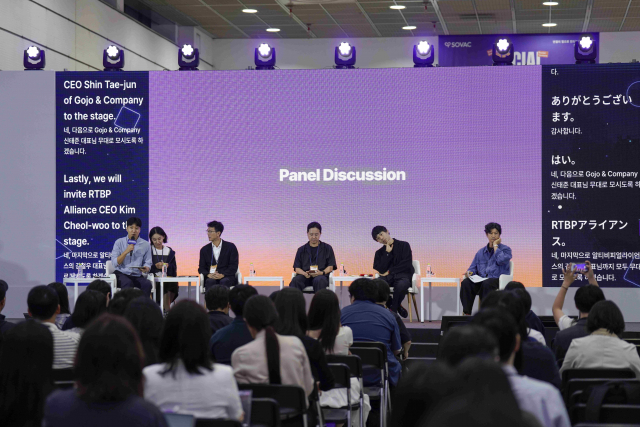
Mitsui Fudosan General Manager Kazuhiro Fujitsuka, Urbanplay Director Shim Young-kyu, Gojo & Company CEO Taejun Shin, and RTBP Alliance CEO Kim Cheol-woo participate in a panel discussion.
The session examined Korean and Japanese revitalization through partnerships, content, capital, and people, discussing how their organic connections create sustainable ecosystems. It focused beyond individual spaces and projects on conditions enabling relationships, experience, and execution capabilities to accumulate over time.
Rather than listing four separate cases, it connected them in a flow: partnership, content, capital, people. It examined the entire ecosystem from industry-academic problem-solving to activating content and spaces, capital and governance sustaining local operators, and people and networks remaining after projects to generate further action.
UD IMPACT Partner Park Dae-eun moderated. In PARTNERSHIP, Mitsui Fudosan's Kazuhiro Fujitsuka shared local problem-solving and ecosystem building through university partnerships. In CONTENTS, Urbanplay's Shim Young-kyu discussed content activating spaces and local creators' roles.
In CAPITAL, Gojo & Company's Taejun Shin addressed capital, trust, and governance sustaining local execution organizations. In PEOPLE, RTBP Alliance's Kim Cheol-woo shared systems and networks remaining after projects.
The speakers' fields broadened perspectives: Mitsui Fudosan in property development and industry-academic cooperation; Urbanplay in urban and spatial content and commercial revitalization; Gojo in finance and social impact; and RTBP in Yeongdo, Busan's urban regeneration, spatial and cultural content, and entrepreneurship ecosystem.
The four speakers then joined “FINAL FOURCAST | Where Do Four Perspectives Meet?” They discussed where revitalization begins, how outside companies and capital can contribute while respecting local agency, and what must remain to turn short projects into lasting execution capabilities and relationship assets.
With bilateral cases and experts from varied fields together, participants showed interest in practical application. The joint discussion examined corporate and local roles, cooperation respecting regional initiative, and assets to leave after projects, creating a lively exchange.
Strout Inc. CEO Kaoru Hirabayashi of Japan also pitched a smart aquaculture solution combining family aquaculture expertise with AI and IoT, offering a new approach linking technology and local industry.
UD IMPACT said a single space or short project rarely sustains revitalization. Change endures when relationships, content giving people reasons to visit and stay, capital supporting continued execution, and people carrying subsequent projects accumulate together. The session connected Korean and Japanese experiences and explored long-term partnerships respecting local agency.
On September 21, UD IMPACT also ran “New Roles for Corporate Social Contribution and Future Talent Development” under “What Talent Should Social Contribution Develop?” It examined changing talent needs amid AI and social shifts and how corporate contribution can develop experience in problem discovery, solving, collaboration, and execution beyond knowledge alone.
Website: https://udimpact.ai/home
Source: Newswire (https://www.newswire.co.kr/newsRead.php?no=1043476)





SEOUL—(Newswire)—UD IMPACT, led by CEO Kim Jung-heon, held “LOCAL FOURCAST: Four Forces Creating Sustainable Regions” at SOVAC 2026 on September 22.
The session examined Korean and Japanese revitalization through partnerships, content, capital, and people, discussing how their organic connections create sustainable ecosystems. It focused beyond individual spaces and projects on conditions enabling relationships, experience, and execution capabilities to accumulate over time.
Rather than listing four separate cases, it connected them in a flow: partnership, content, capital, people. It examined the entire ecosystem from industry-academic problem-solving to activating content and spaces, capital and governance sustaining local operators, and people and networks remaining after projects to generate further action.
UD IMPACT Partner Park Dae-eun moderated. In PARTNERSHIP, Mitsui Fudosan's Kazuhiro Fujitsuka shared local problem-solving and ecosystem building through university partnerships. In CONTENTS, Urbanplay's Shim Young-kyu discussed content activating spaces and local creators' roles.
In CAPITAL, Gojo & Company's Taejun Shin addressed capital, trust, and governance sustaining local execution organizations. In PEOPLE, RTBP Alliance's Kim Cheol-woo shared systems and networks remaining after projects.
The speakers' fields broadened perspectives: Mitsui Fudosan in property development and industry-academic cooperation; Urbanplay in urban and spatial content and commercial revitalization; Gojo in finance and social impact; and RTBP in Yeongdo, Busan's urban regeneration, spatial and cultural content, and entrepreneurship ecosystem.
The four speakers then joined “FINAL FOURCAST | Where Do Four Perspectives Meet?” They discussed where revitalization begins, how outside companies and capital can contribute while respecting local agency, and what must remain to turn short projects into lasting execution capabilities and relationship assets.
With bilateral cases and experts from varied fields together, participants showed interest in practical application. The joint discussion examined corporate and local roles, cooperation respecting regional initiative, and assets to leave after projects, creating a lively exchange.
Strout Inc. CEO Kaoru Hirabayashi of Japan also pitched a smart aquaculture solution combining family aquaculture expertise with AI and IoT, offering a new approach linking technology and local industry.
UD IMPACT said a single space or short project rarely sustains revitalization. Change endures when relationships, content giving people reasons to visit and stay, capital supporting continued execution, and people carrying subsequent projects accumulate together. The session connected Korean and Japanese experiences and explored long-term partnerships respecting local agency.
On September 21, UD IMPACT also ran “New Roles for Corporate Social Contribution and Future Talent Development” under “What Talent Should Social Contribution Develop?” It examined changing talent needs amid AI and social shifts and how corporate contribution can develop experience in problem discovery, solving, collaboration, and execution beyond knowledge alone.
Website: https://udimpact.ai/home
Source: Newswire (https://www.newswire.co.kr/newsRead.php?no=1043476)